en
 pl
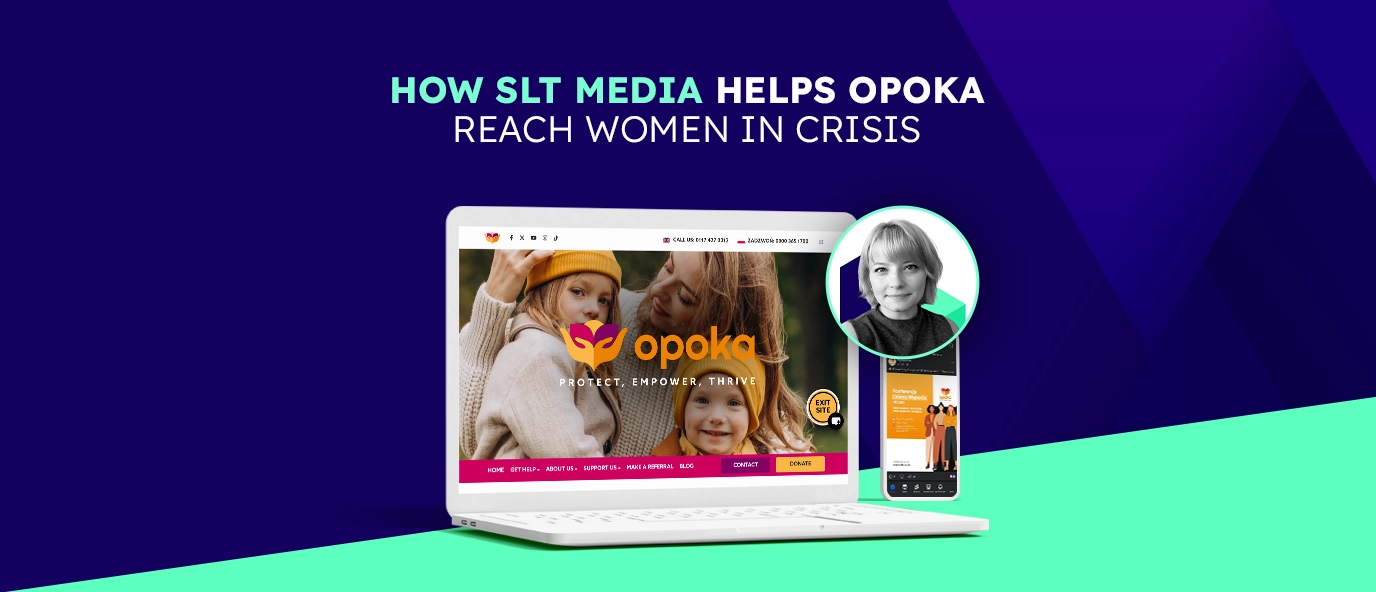

From communication chaos to a stronger voice of support – how SLT Media helps Opoka reach women in crisis
In marketing, some projects are designed to sell. Others are designed to inform, build trust and help someone take their first step towards support. Our work with Opoka CIC belongs to the second category.
This case study shows how thoughtful communication, social media and professional materials can make a real difference for a support organisation.
SLT Media supports Opoka primarily through pro bono social media management and selected smaller communication activities. Larger projects, such as the website, printed materials and selected elements of visual identity, were delivered as paid work on preferential terms.
Quick project summary
| Area | SLT Media’s role |
| Social media | Ongoing pro bono communication support: content, graphics, planning and regular online presence. |
| Website | A paid project delivered on preferential terms, focused on clarity, accessibility and trust. |
| Printed materials | Paid projects delivered on preferential terms, supporting offline communication and events. |
| Branding and graphics | A consistent, safe and professional visual layer for the organisation’s communication. |
| Impact | Greater visibility, increased trust, more contacts, more referrals and a stronger online presence. |
Introduction: marketing that helps
Opoka CIC supports people experiencing domestic abuse and people facing difficult life situations, with particular focus on Polish-speaking women and families in the United Kingdom. This is an organisation whose communication has to be more than nice marketing. It needs to be clear, safe, accessible and handled with great care.
At SLT Media, we have supported Opoka for a long time, mainly through pro bono social media management. We also support selected smaller communication and campaign activities, also pro bono. Other projects, such as the website, printed materials and selected elements of visual identity, were delivered as paid work on preferential terms.
This distinction matters because transparency matters to us. Our support for Opoka combines community work, strategic marketing and professional services delivered in a way that remains accessible for an organisation working in such an important area.
The challenge: how do you talk about domestic abuse clearly, safely and respectfully?
Marketing for a support organisation is very different from marketing for a typical business. This is not about aggressive sales, fast conversions or catchy slogans for the sake of attention.
In Opoka’s case, communication had to perform several very specific functions. People looking for help need to understand quickly what the organisation does and where they can turn. In a crisis, nobody has the time or energy to guess where to click, who to message or whether an organisation truly understands their situation.
The content also has to build trust. People experiencing abuse often take a long time before asking for help. Communication cannot shame them, pressure them or oversimplify their experience. It needs to be clear, calm and human.
Opoka communicates not only with people who need support, but also with partners, institutions, community organisations, professionals and people who may refer others for help. That is why the goal was not to simply “create posts”. The goal was to create consistent, clear and credible communication that supports the real work of the organisation.
Our role: pro bono social media and wider communication support
The main area of our collaboration is pro bono social media management for Opoka. In practice, this means creating and publishing content that helps raise awareness, explain difficult topics in simple language and regularly remind people that support is available.
We work to make Opoka’s communication easy to understand for people in crisis, professional for institutions and partners, visually consistent, culturally sensitive, respectful and accessible to the Polish-speaking community in the UK.
Alongside regular social media activity, we also support Opoka with selected smaller projects, campaigns and communication materials. Some of these activities are delivered pro bono, especially when they relate to ongoing communication, visibility or support for important community initiatives.
The website as a centre for information and trust
One of the larger projects delivered for Opoka was a new website. This project was completed as paid work on preferential terms.
A website for a support organisation cannot be just an online brochure. It needs to work as an information hub, a first point of contact and a place where someone in need can be directed safely.
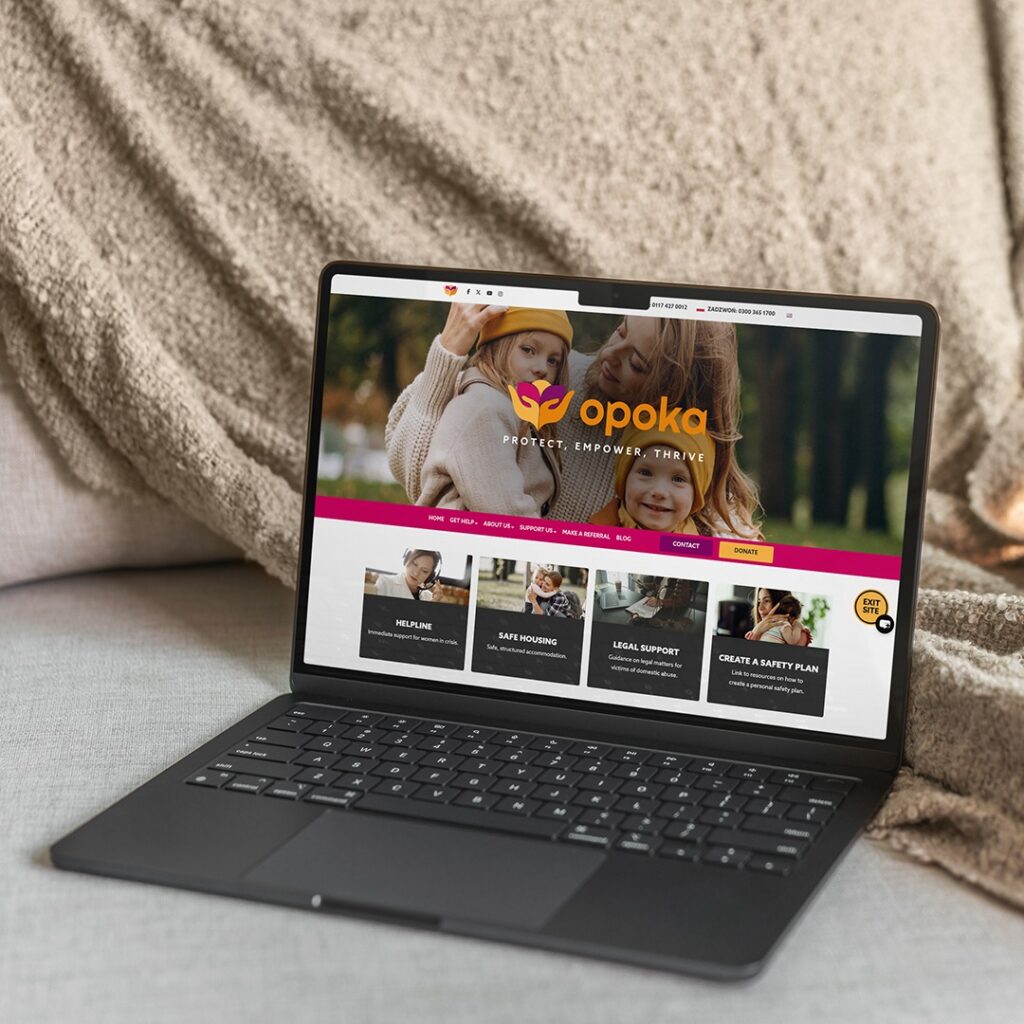
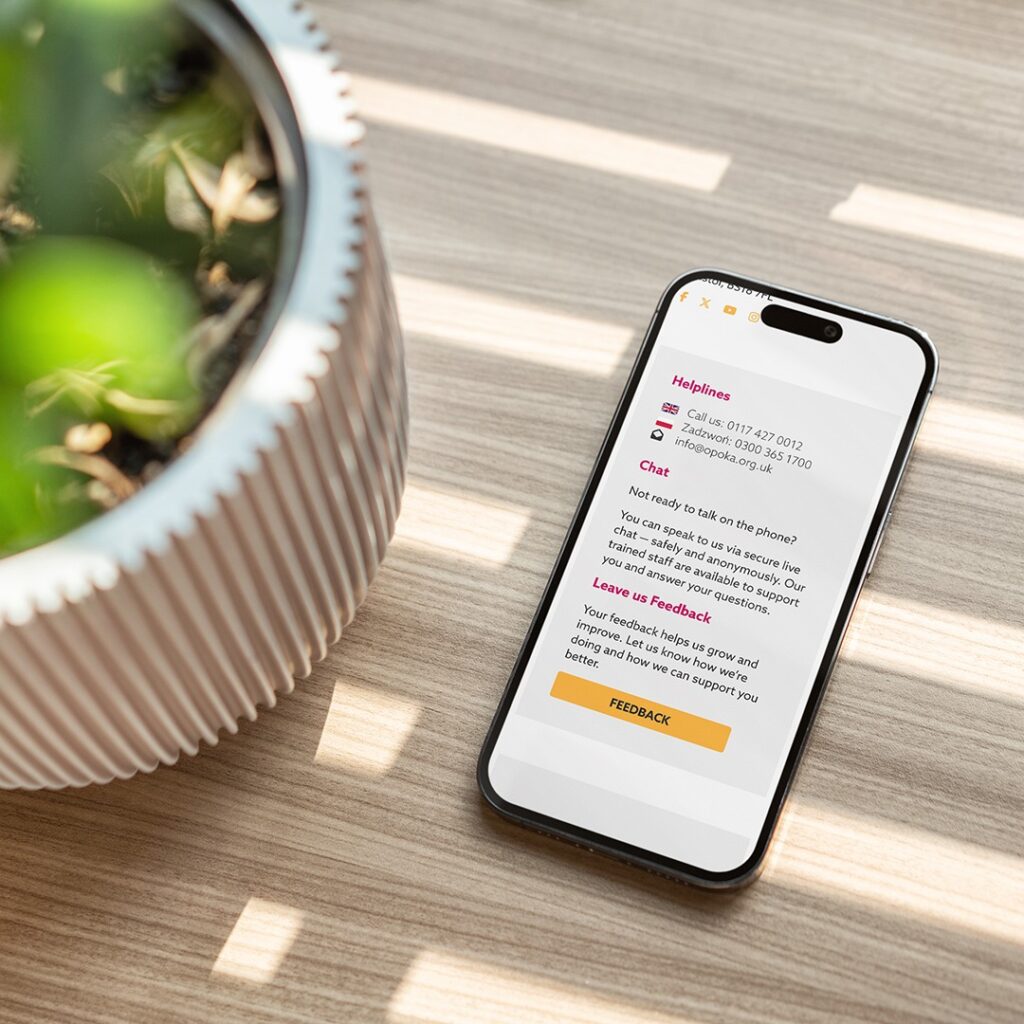
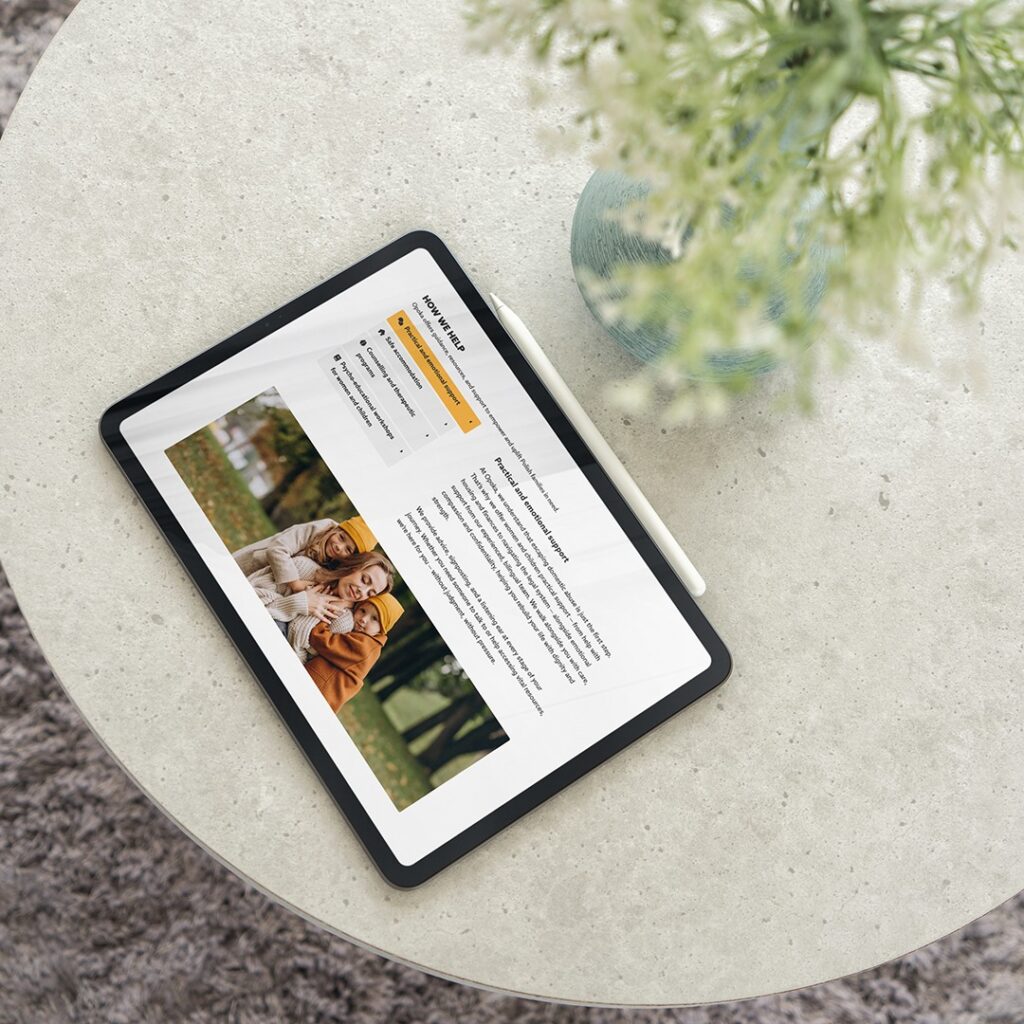
That is why the website project focused on clarity, structure and functionality. The new website was designed so that users could quickly find information about available support, understand what Opoka does and learn how to contact the organisation.
It was also important to create space for different audiences. A person looking for immediate support needs different information from a professional who wants to refer someone to Opoka, and different again from a potential partner, donor or collaborating organisation.
Branding and visual materials: design that supports trust
The visual side of the project was also important. An organisation working with such a sensitive subject needs an identity that is neither too heavy nor too light.
Visual communication should create a sense of safety, professionalism and hope. It cannot look random, because in the support sector, trust is also built through consistency.
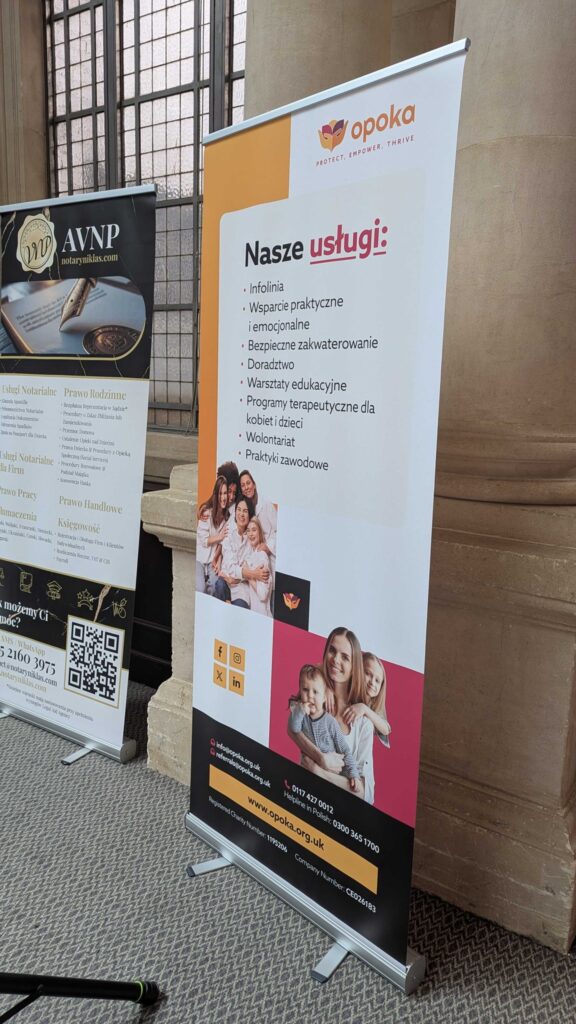
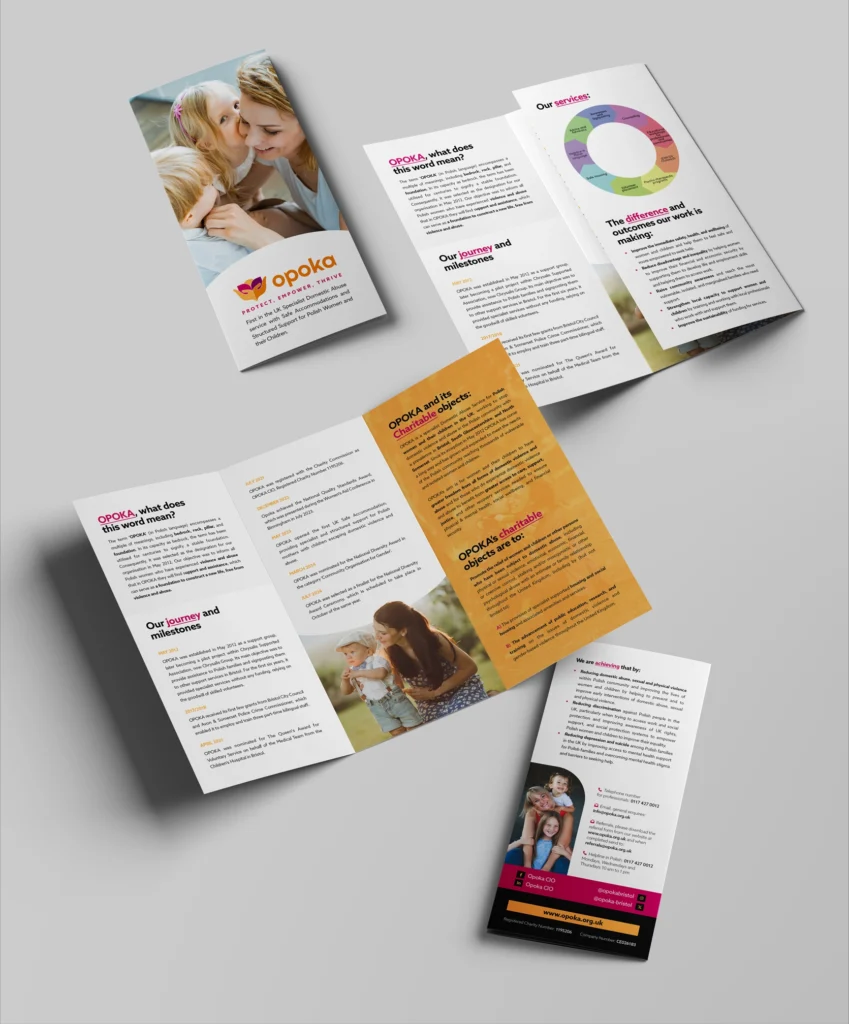
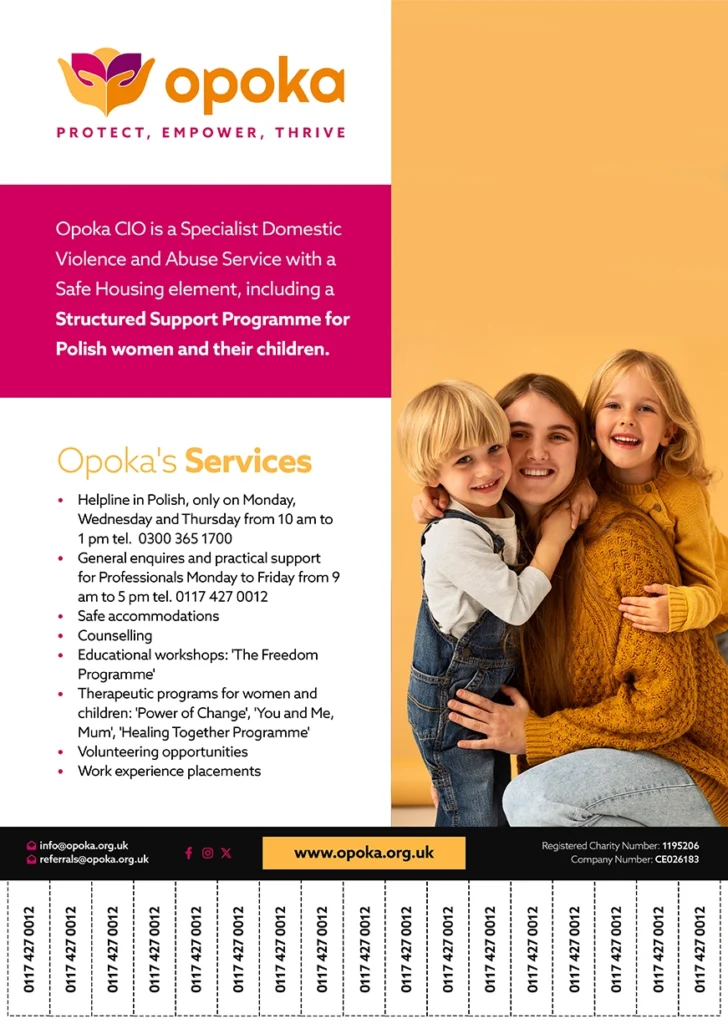
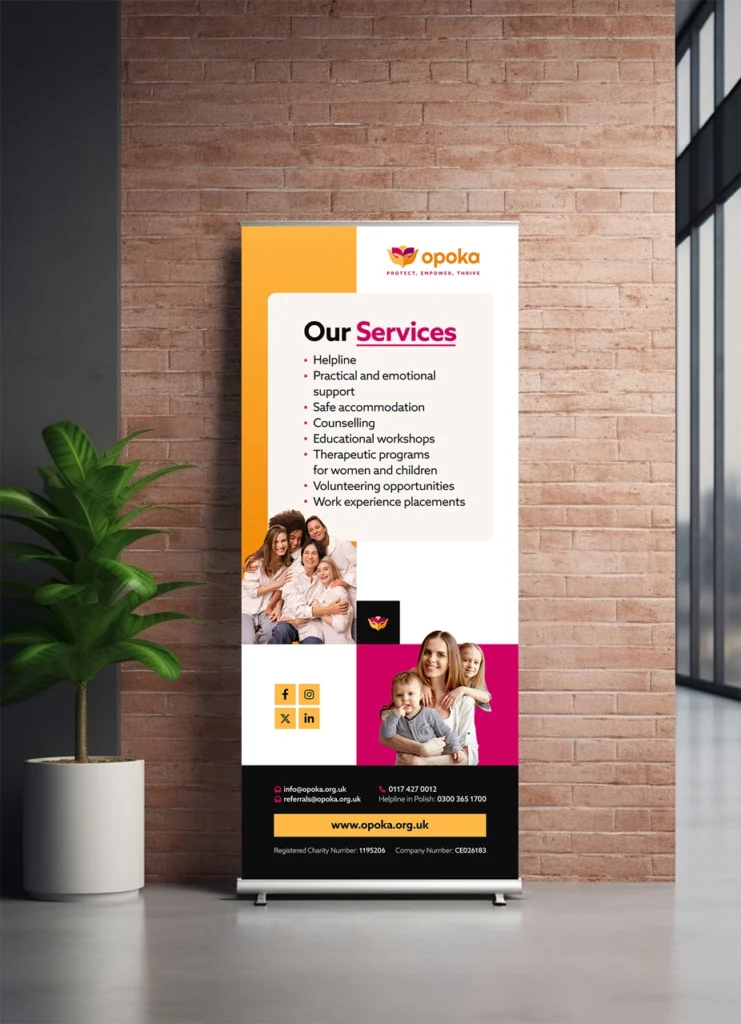
As part of the collaboration, we created social media graphics, printed material designs and other elements supporting the organisation’s communication. With this type of work, we always focus on making materials clear, professional and easy to use in real situations: during events, meetings, conferences, information campaigns or conversations with partners.
Printed materials and offline communication
Although so much communication now happens online, printed materials still matter greatly for community organisations.
A leaflet, poster, roll-up banner or information material shared during a meeting may be someone’s first contact with the organisation. It may also reach a person who does not follow social media profiles, is not actively searching for help online or receives the information through a school, institution, friend or local organisation.
This is why we also supported Opoka with printed materials. These projects were delivered as paid work on preferential terms.
Our aim was to maintain consistency between online and offline communication. A person who sees a social media post, visits the website or receives a leaflet should feel they are interacting with the same credible organisation.
Social media for a charity: consistency, empathy and simple language
Managing social media for an organisation like Opoka requires a different approach from typical advertising activity. The aim is not for every post to be sales-led. The aim is education, visibility, trust and accessibility.
When creating content for Opoka, we focus on several areas: education, awareness, trust and relationship-building with partners. We explain topics linked to domestic abuse, support, safety, warning signs and the process of seeking help.
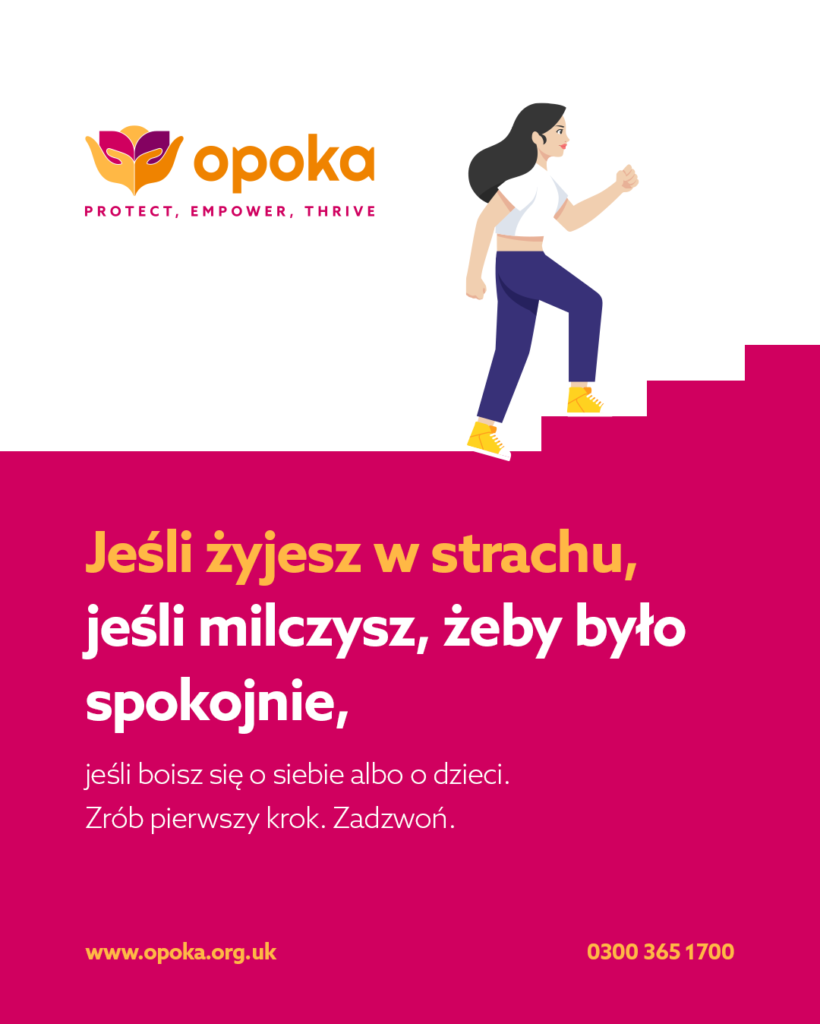
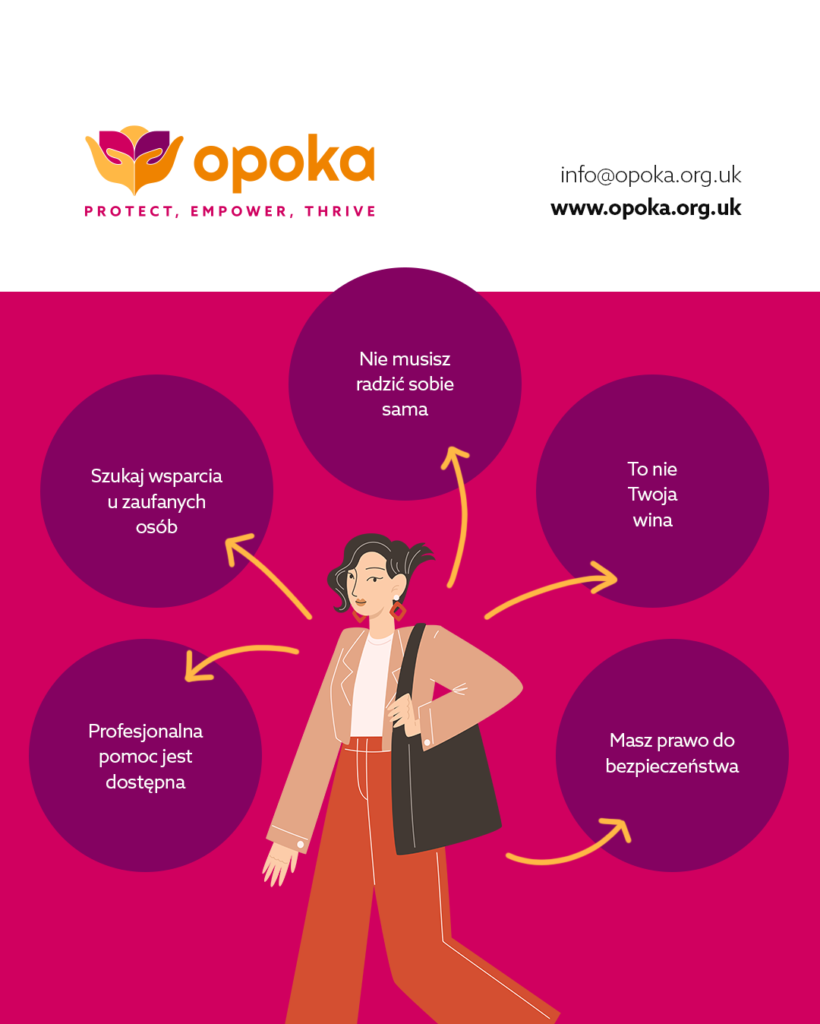
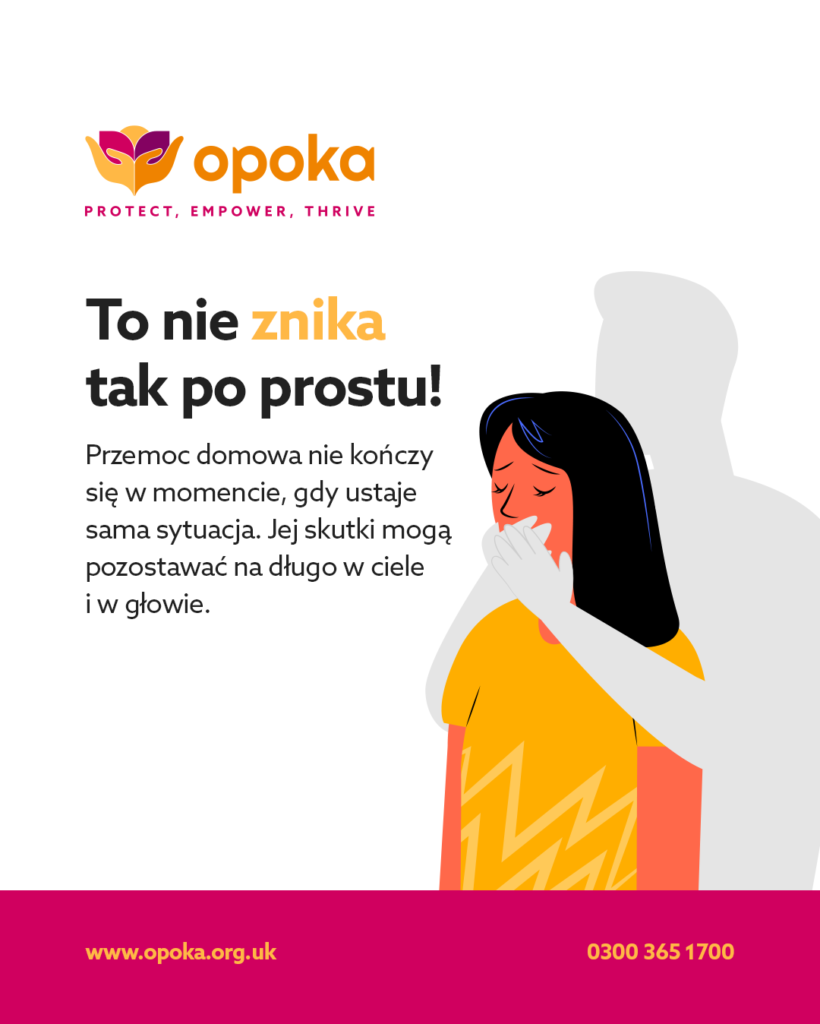
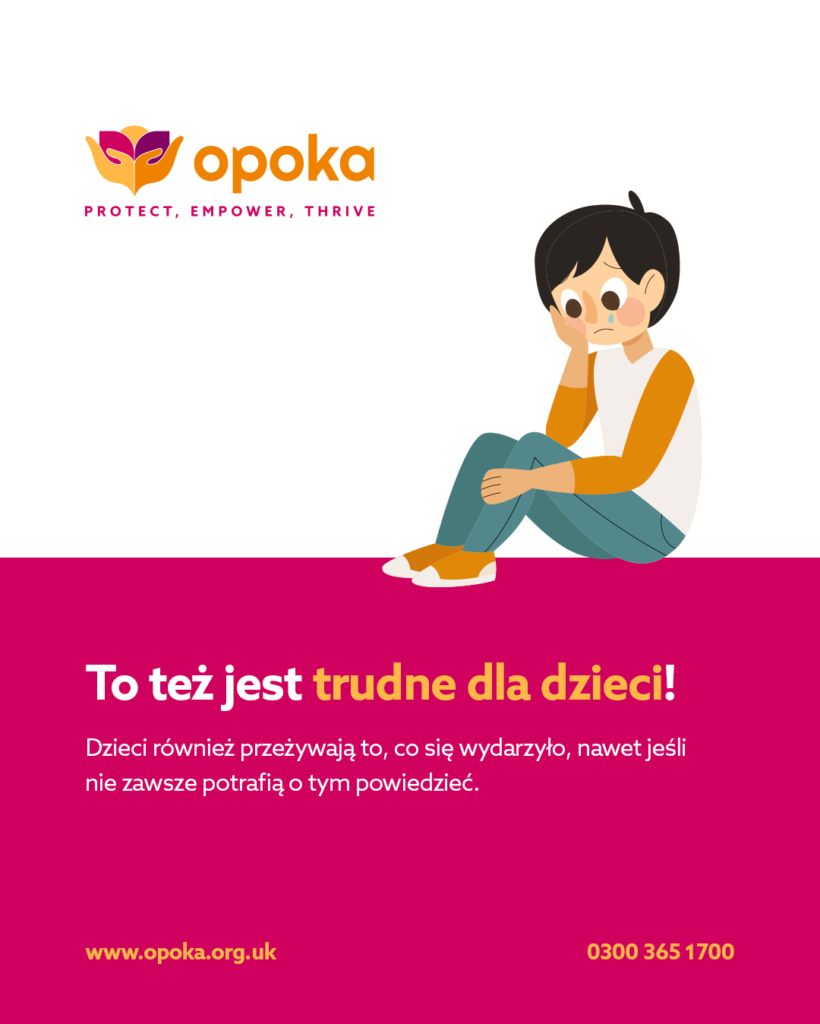
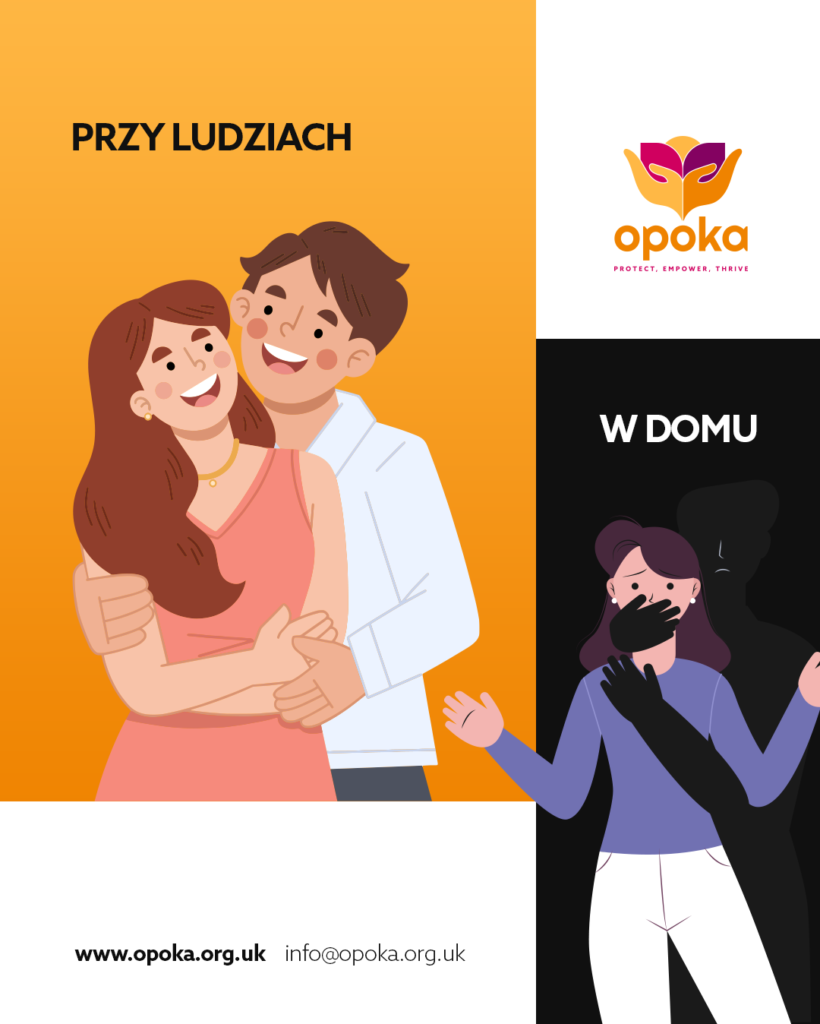
A regular social media presence helps remind people that Opoka exists and that they can reach out. Through consistent, professional and calm communication, the organisation becomes more recognisable and easier to recommend.
Results: greater visibility, stronger trust and real impact
The most important result of this collaboration is not the posts, graphics or materials themselves. What matters most is that communication began to support Opoka’s mission more effectively.
Through consistent social media activity, Opoka gained a more professional, coherent and active online presence. These are not just marketing metrics. For a support organisation, greater visibility may mean that someone finds the information they need sooner. It may mean that someone recommends Opoka to a person in a difficult situation. It may mean that an institution understands more clearly what the organisation does.
The growth of Facebook followers from around 1,900 to almost 2,500 since more intensive communication began is not just a number. For a support organisation, greater visibility can mean faster access to support.
The growth of Facebook followers from around 1,900 to almost 2,500 since more intensive communication began is not just a number. For a support organisation, greater visibility can mean faster access to support.
Among the results we are especially pleased with are:
• increased recognition of the organisation,
• stronger engagement on social media,
• more structured communication,
• more people and organisations recognising Opoka as an important place of support,
• more referrals and contacts from other organisations,
• more women reaching out for help,
• Facebook follower growth from around 1,900 to almost 2,500 and still growing.
Cultural sensitivity as part of the strategy
One of the most important parts of this collaboration is understanding the audience. Opoka operates in the United Kingdom, but supports, among others, Polish-speaking women and families. This means the communication must take into account language, culture, migrant experience, barriers to engaging with institutions and often very difficult emotions.
Good translation is not enough. Context matters. At SLT Media, we often say that effective communication for migrant communities is not only about changing the language. It is about adapting the tone, examples, level of explanation and the way trust is built.
In our work with Opoka, this was especially important. The content had to be simple, but not childish. Supportive, but not patronising. Clear, but not cold. Professional, but still human.
Why this project matters to SLT Media
SLT Media has worked for years with businesses, organisations and brands that need clear communication. We support businesses with website development, social media management, content creation, graphic design and strengthening their online presence.
But our collaboration with Opoka is especially meaningful to us. It is a project where our marketing skills can directly support an organisation helping people in crisis. We can use strategy, design, content marketing and social media not only to increase sales, but to make important information easier to find, understand and share.
It is also an example of how marketing for a non-profit organisation should work in practice. Not as a nice extra, but as a real tool for increasing reach, trust and the effectiveness of the organisation’s work.
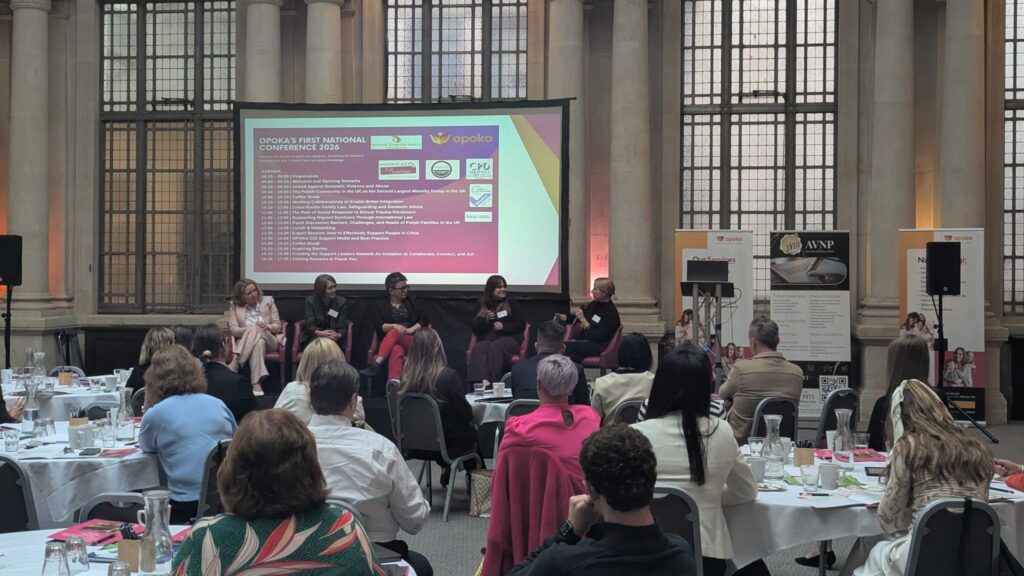
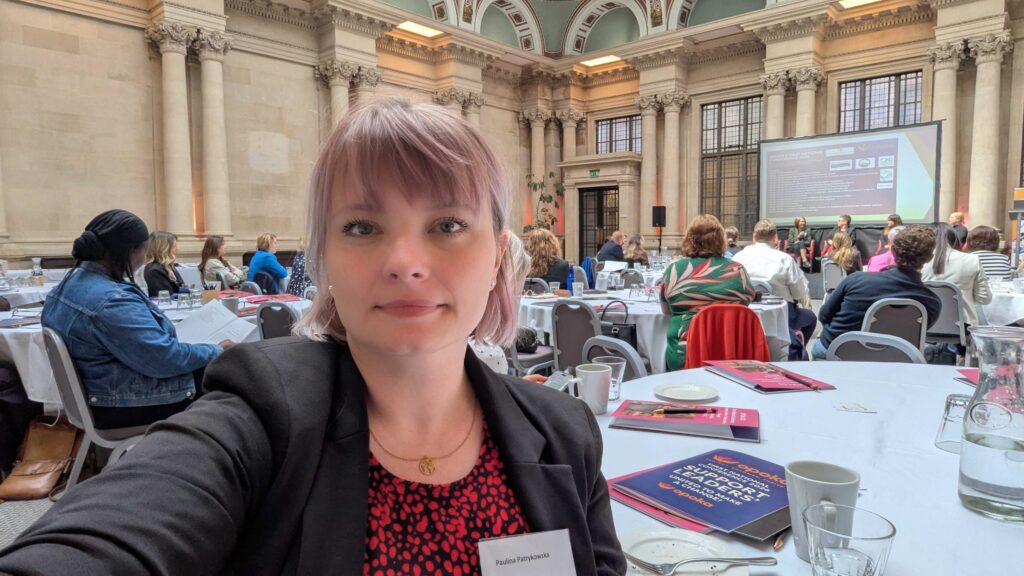
Non-profit marketing: what this collaboration taught us
Our work with Opoka confirmed several things we also see in other community-focused projects.
Support organisations need professional communication just as much as businesses do. Sometimes even more, because their audiences are often in more difficult situations and need quick access to clear information.
Social media for charities should not rely only on appeals for support. It needs education, a clear presentation of the organisation’s value, trust-building and regular reminders that help is available.
A website for a charity must be easy to use. A strong visual design is important, but clear structure, simple contact routes and content written in human language matter even more.
Consistent branding helps an organisation be taken seriously. This is especially important when working with institutions, partners, sponsors and the local community.
Key takeaways:
1. Professional communication is needed by support organisations just as much as by businesses.
2. Social media should educate, build trust and remind people that help is available.
3. A website should guide users clearly to information and contact details.
4. Consistent branding strengthens credibility with partners, sponsors and communities.
Collaboration that was noticed
Our work with Opoka has also become one of the projects we are especially proud of as an agency.
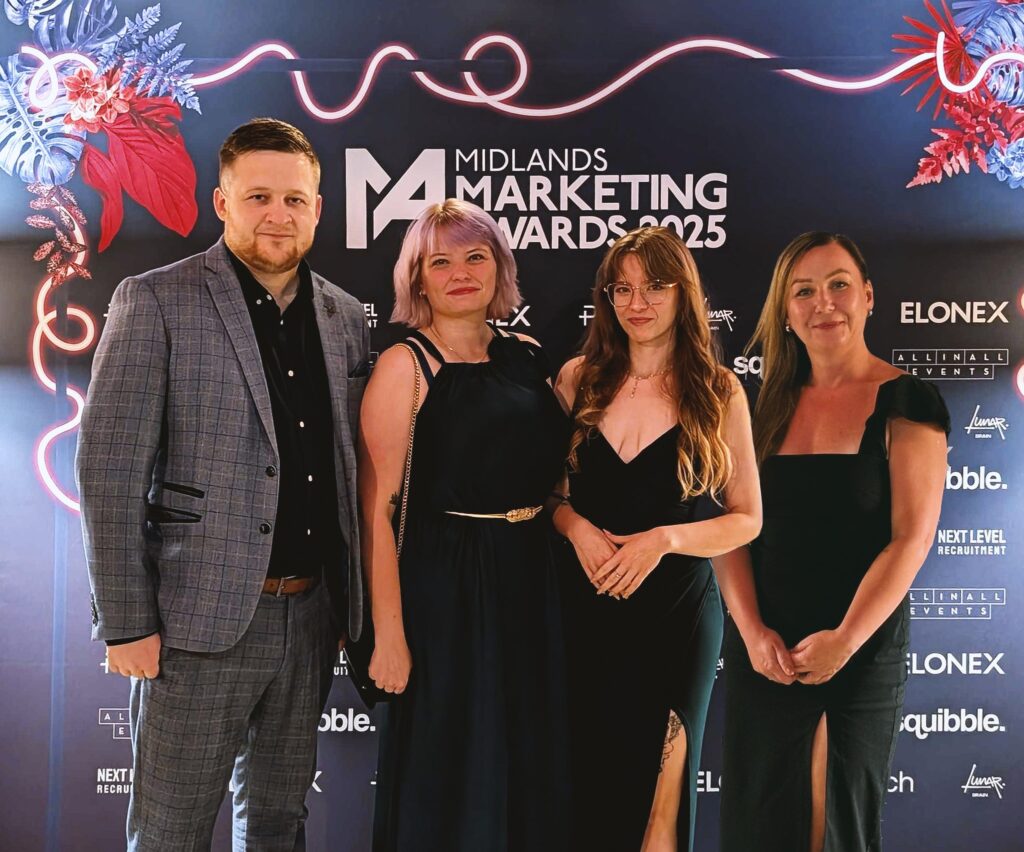
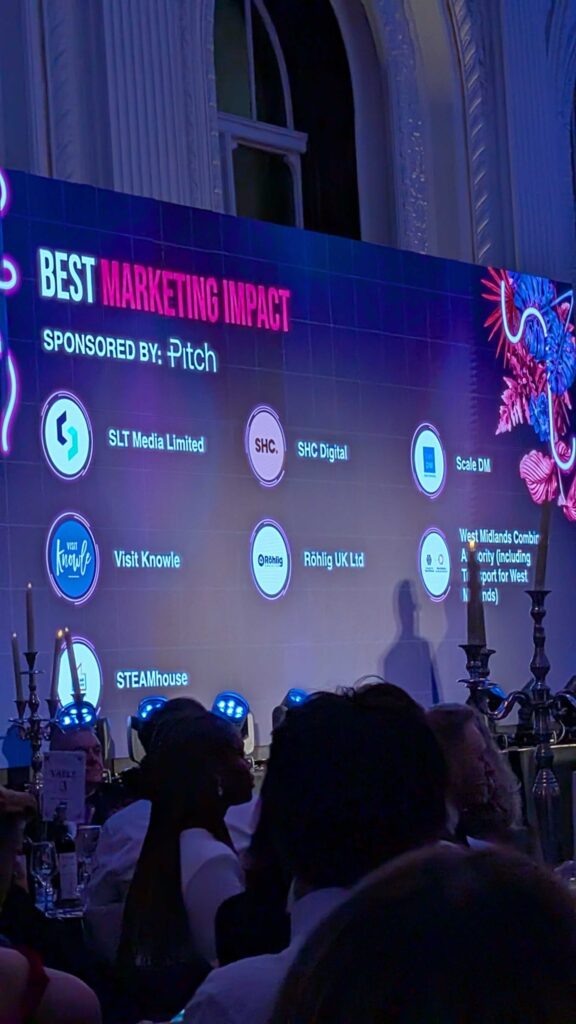
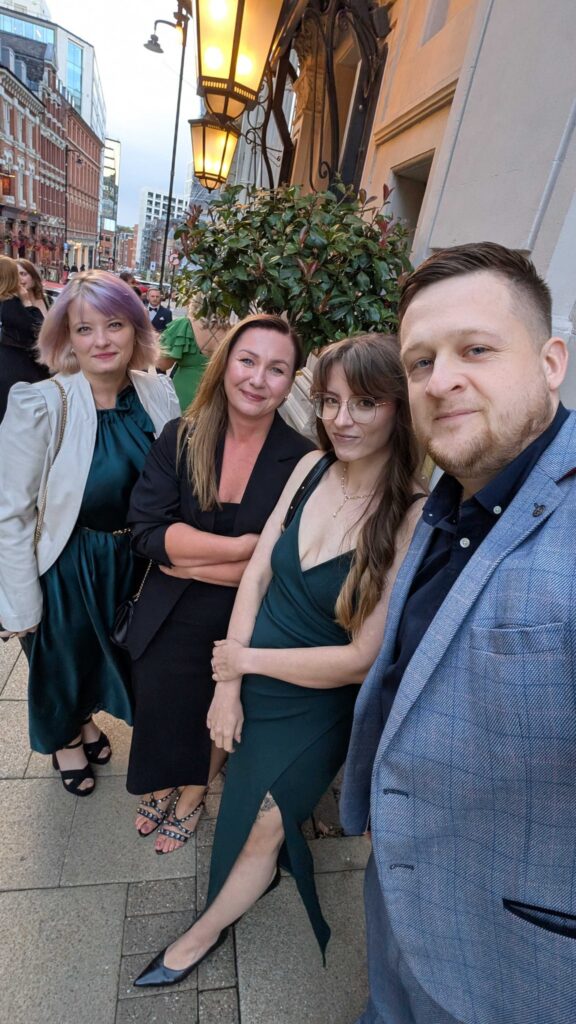
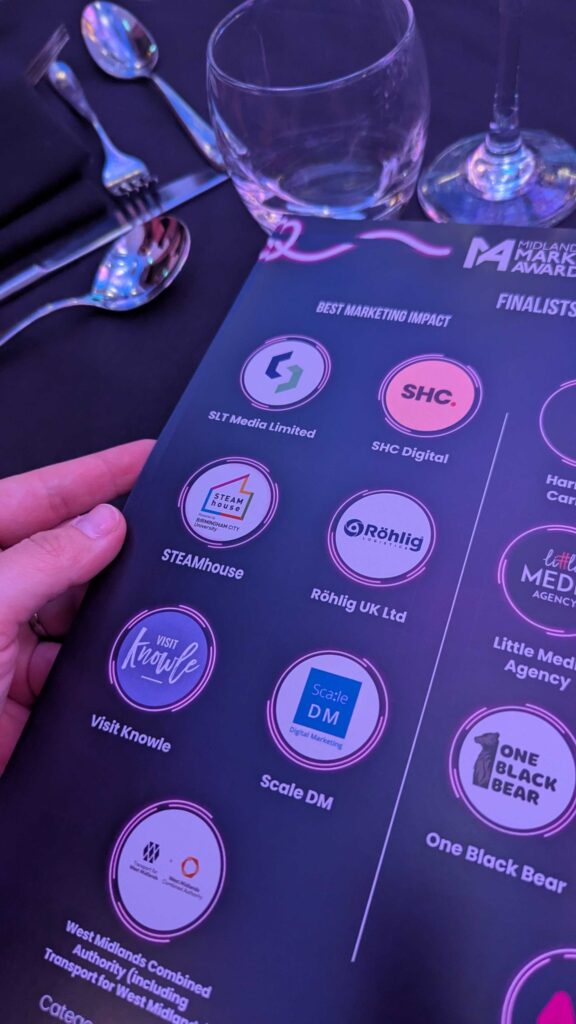
The campaign and communication support for Opoka were recognised through SLT Media’s nomination in the Marketing Impact of the Year category at the Midlands Marketing Awards 2025.
For us, this recognition matters, but what matters even more is that the project has real meaning beyond the marketing industry. This work helps increase the visibility of an organisation supporting people in very difficult situations.
Conclusion: good marketing can help
SLT Media’s collaboration with Opoka shows that non-profit marketing does not need to be loud, pushy or overly emotional to work.
It can be calm, thoughtful and consistent. It can strengthen trust. It can make contact easier. It can help an important organisation become more visible to the people who need it.
For Opoka, this means stronger communication, a more professional online presence and better tools for reaching the community.
For us, it means something equally important: the opportunity to use our skills where marketing has a direct impact on people. And that is exactly why this project matters so much to SLT Media.